Beginner's Guide to Surfing in Cartagena, Colombia
Your first surf lesson: here is how it works
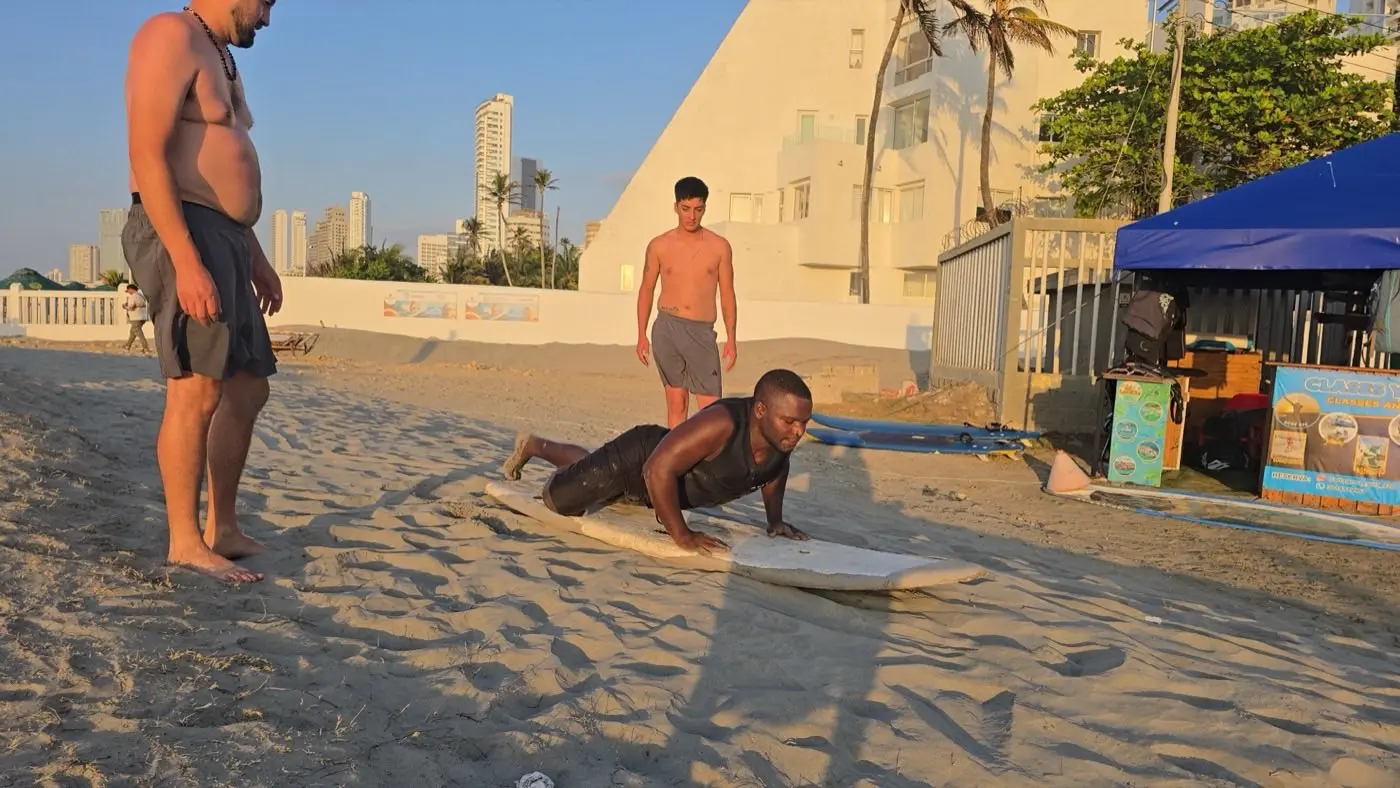
Showing up to your first surf lesson in Cartagena with butterflies in your stomach is completely normal. The first thing we do is get rid of those nerves. Everything starts on the sand, away from the water, where your instructor explains the basics: how to lie on the board, how to paddle, and most importantly, how to pop up to your feet. We practice this movement several times on the beach until it feels natural.
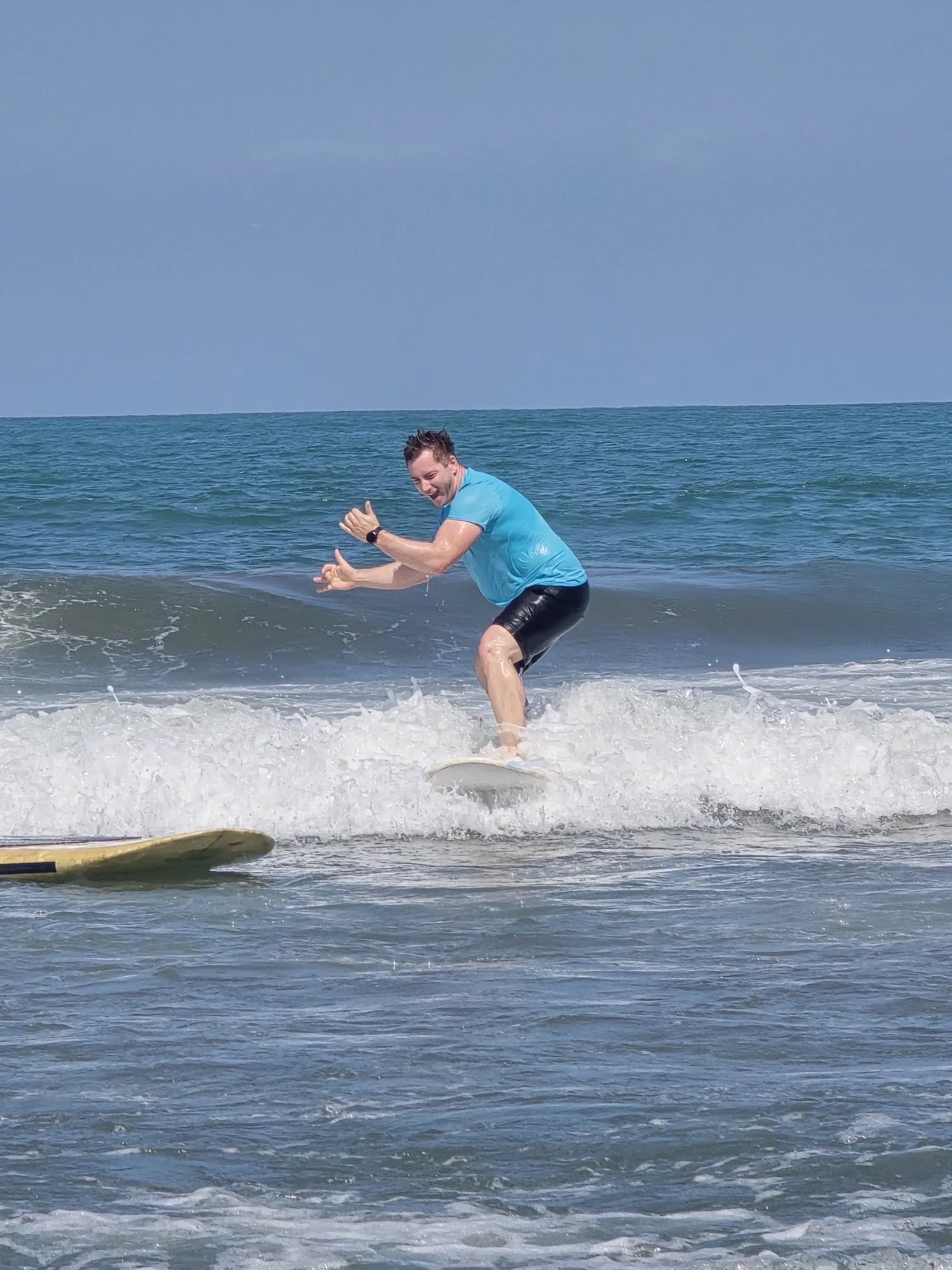
After about 20 minutes on the sand, we head into the water. And here is the best part: we are not throwing you into big waves. We start in the whitewater zone, where the waves have already broken and glide gently toward shore. Your instructor positions you, gives you the perfect push at just the right moment, and you focus only on standing up. Most of our students manage to get to their feet during their very first session.
Surf lessons in Cartagena last between 90 minutes and 2 hours, depending on your energy and ocean conditions. We include all the equipment: a soft foam board (ideal for beginners because it does not hurt if it bumps you), a UV protection rashguard, and the constant guidance of your instructor right there in the water with you. You do not need to bring anything except enthusiasm.
Cartagena waves: perfect for learning
Cartagena is not Pipeline or Nazaré, and that is exactly what makes it perfect for learning to surf. The waves at Playa Las Velas are gentle and consistent, generally between one and three feet. For a beginner, this is ideal: big enough to feel the thrill of gliding, but not so big that they scare you off.
The best time for surfing in Cartagena coincides with the north swell, which brings more defined waves between November and March. But unlike other spots where waves only work in season, here you can find surfable waves nearly year round thanks to the coastline orientation and local winds. Even in the flattest months, afternoons usually bring small waves that are perfect for practice.
The sandy bottom at our spot is another huge advantage. There are no rocks, no sea urchins, no sharp coral. If you fall (and you will fall, it is part of the process), you land on soft sand in warm water. That gives you the confidence to try again and again without fear of injury.
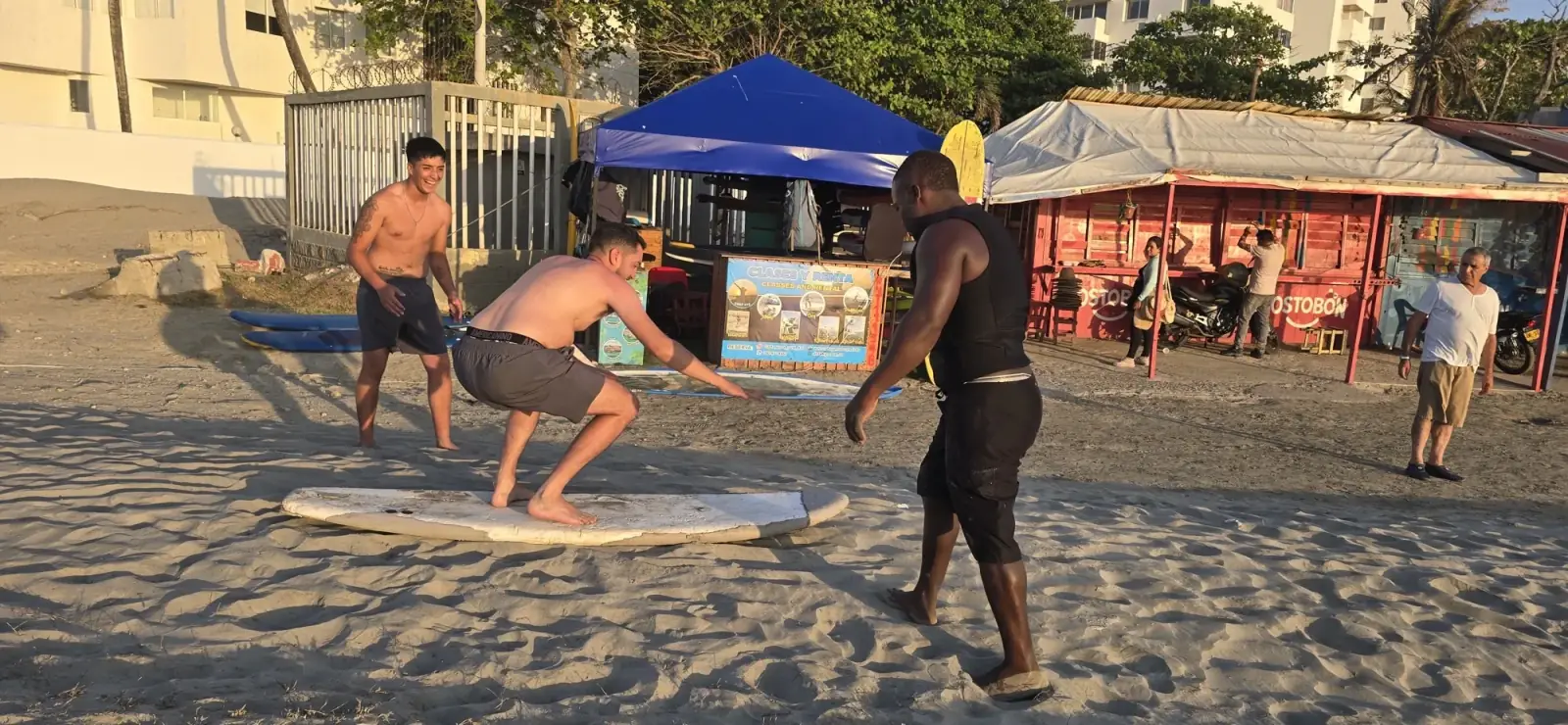
Tips from your instructor for your first time
After years of teaching people to surf in Cartagena, there are a few tips I always share with first-timers. First: do not look at the board. Your body follows your eyes, so if you look down, you fall down. Always look where you want to go, toward the beach. Second: do not grab the rails of the board when you pop up. Place your hands flat at chest height and push up with power.
Third, and this is the big one: relax in the water. The ocean holds you up. When you feel yourself losing balance, bend your knees instead of going rigid. Relaxed surfers fall less, and when they do fall, they bounce back faster. Do not fight the ocean. Flow with it.
One more thing: wear water-resistant sunscreen and apply it at least 20 minutes before getting in the water. The Cartagena sun is intense, especially between 10 AM and 3 PM. At Surf 420, we always recommend early morning or mid-afternoon sessions, when the light is gorgeous and the sun is more forgiving.
💡 Tip: Eat something light at least one hour before your lesson. Surfing on an empty stomach leaves you drained, but surfing right after a big meal is uncomfortable. A piece of fruit and water is perfect.
Best beaches for surfing in Cartagena
Playa Las Velas, in the El Laguito sector of Bocagrande, is our home spot and where we run most of our lessons. It has the perfect combination for beginners: gentle waves, sandy bottom, minimal current, and easy access from the Bocagrande hotel zone. The bay also acts as a natural filter that softens incoming swells, protecting the spot from waves that are too powerful.
For surfers with a bit more experience, there are other spots along the Cartagena coast that offer more challenging waves. La Boquilla has a beach break that can get interesting when a solid north swell arrives, and Punta Canoa, a bit further north, offers longer rides in the right conditions. But for your first few sessions, nothing beats Las Velas.
What makes surfing in Cartagena truly special is the setting. You are learning to surf with the Bocagrande skyline and colonial walls as your backdrop. When you stand up for the first time and see that view, the moment stays with you forever. It is not just a surf lesson. It is an experience that defines your trip.
Frequently Asked Questions
Do I need previous experience to take a surf lesson?
Not at all. Our surf lessons in Cartagena are designed specifically for complete beginners who have never touched a surfboard. We start from scratch on the sand and stay with you in the water the entire time. Most students manage to stand up during their very first session.
What is included in a surf lesson in Cartagena?
Each lesson includes a soft foam surfboard (safe for beginners), a UV protection rashguard, personalized instruction on the sand and in the water, and 90 minutes to 2 hours of practice time. You do not need to bring anything except your swimsuit and a positive attitude. We also provide water after the session.
How long does it take to stand up on a surfboard?
Most of our students manage to stand up on whitewater waves during their first lesson, usually within the first hour in the water. Staying up and controlling direction takes a bit more practice, typically 2 to 3 sessions.
What should I wear for surfing?
Just bring a comfortable swimsuit that stays securely in place (nothing that comes off easily). We provide a UV protection rashguard to wear over it. Water in Cartagena ranges from 79 to 84 degrees Fahrenheit year round, so you will never need a wetsuit. Bring water-resistant sunscreen.